The Sacagawea Dollar is one of the most recognizable modern United States dollar coins. First introduced in 2000, it was designed to honor Sacagawea, the Shoshone woman who assisted the Lewis and Clark expedition. The coin quickly attracted public attention because of its golden color, distinctive design, and historical symbolism.
Although millions of Sacagawea Dollars were produced, not every coin is rare or valuable. Most ordinary examples remain close to their face value, especially when they show normal circulation wear. However, certain varieties, minting mistakes, unusual planchets, and authenticated errors can command substantial premiums in the collector market.
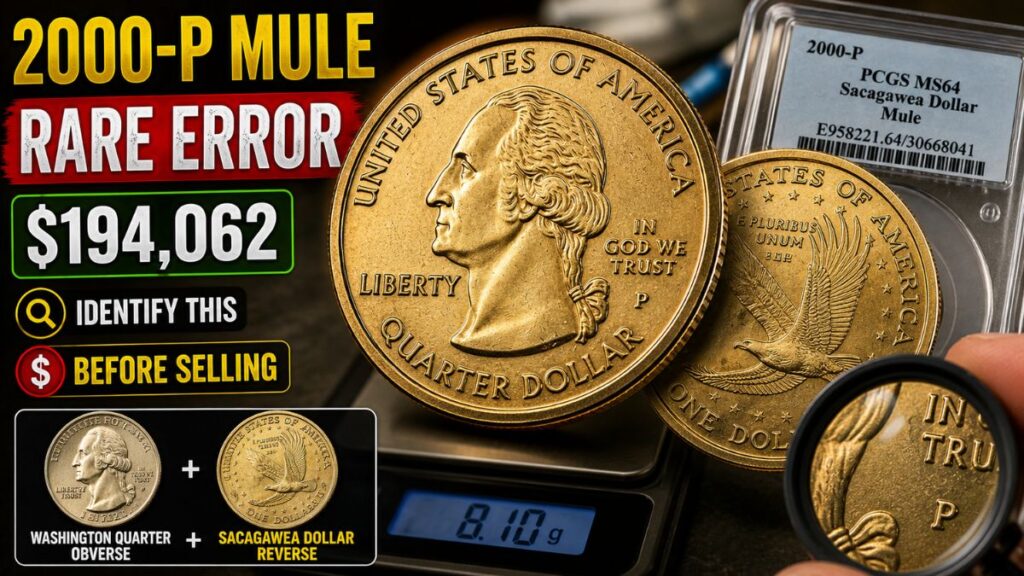
One of the most important examples is the 2000-P Sacagawea Dollar mule error. This unusual coin combines the reverse design of a Sacagawea Dollar with the obverse design of a Washington Quarter. Because the two sides were not intended to be struck together, genuine examples are extremely rare and highly sought after.
This distinction is essential for anyone searching for a valuable Sacagawea Dollar. A normal 2000 coin is not automatically worth thousands or millions of dollars. The value depends on exact identification, mint mark, condition, authenticity, variety, and collector demand.
What Is the Sacagawea Dollar?
The Sacagawea Dollar is a United States dollar coin introduced in 2000. Its obverse features Sacagawea, while its reverse originally showed a soaring eagle surrounded by stars. The design was created to represent the contribution of Native Americans to American history and exploration.
The coin has a golden appearance, but it is not made of solid gold. Its outer layers consist of a copper-based material, while the core contains other metals. The golden color comes from its metallic composition and manufacturing process rather than precious-metal content.
The coin was intended to provide a durable dollar denomination for everyday transactions. However, public acceptance was limited compared with paper currency, and many examples eventually entered circulation, vending machines, collections, and storage containers.
The Sacagawea Dollar later became part of the Native American Dollar program, which introduced changing reverse designs honoring Native American people, achievements, and cultural contributions.
The Original 2000 Sacagawea Dollar
The year 2000 was the first production year for the Sacagawea Dollar. Because it was the introductory year, collectors often pay special attention to 2000-dated examples.
However, the first year of production alone does not make every coin rare. Large numbers of 2000 Sacagawea Dollars were produced, and many remain available to collectors. Ordinary coins with standard designs, normal surfaces, and common mint marks generally do not have extraordinary values.
Collectors should examine the following characteristics:
- The year shown on the coin.
- The mint mark, if present.
- The obverse and reverse designs.
- The coin’s condition.
- Any unusual striking characteristics.
- Evidence of a genuine minting error.
- Whether the coin has been professionally authenticated.
The difference between a common first-year coin and a valuable error coin can be significant. Correct identification is therefore more important than relying on a dramatic online price claim.
Understanding the 2000-P Sacagawea Dollar Mule Error
The 2000-P Sacagawea Dollar mule is one of the most famous errors connected to the series. The term “mule” describes a coin struck using mismatched dies that were not intended to be paired.
In this case, the reverse resembles the normal Sacagawea Dollar reverse, while the obverse is associated with the Washington Quarter. The two designs belong to different denominations, making the combination highly unusual.
A standard Sacagawea Dollar should have Sacagawea on the obverse. A standard Washington Quarter should have George Washington on the obverse. A mule error combines elements that should not appear together on the same coin.
The 2000-P mule is especially important because it carries the Philadelphia mint mark and has characteristics that distinguish it from ordinary Sacagawea Dollars.
Collectors should not assume that every coin showing an unusual design is a mule. Damage, alterations, counterfeit work, die deterioration, and post-mint modifications can create misleading appearances. Professional examination is necessary when a potentially valuable mule is suspected.
How the Mule Error Happened
A mule error can occur when incompatible dies are used together during the striking process. Coin production involves carefully controlled equipment, dies, planchets, and quality checks. A mismatch between dies can produce a coin that does not conform to the intended design.
The 2000-P Sacagawea Dollar mule is believed to have resulted from an incorrect pairing of dies. Instead of receiving the expected Sacagawea Dollar obverse, the planchet was struck with an obverse associated with the Washington Quarter.
This type of error is different from ordinary doubling, scratches, dents, or off-center strikes. The defining feature is the use of mismatched design dies.
Because the error involves a major design combination, it is easier to distinguish from minor production imperfections. Nevertheless, authentication remains necessary because valuable modern errors attract counterfeiting and alteration attempts.
How to Identify a Possible 2000-P Mule
A careful inspection should begin with both sides of the coin. Do not examine only the date or mint mark. The entire design must be considered.
The most important identification feature is the mismatch between the obverse and reverse.
A normal Sacagawea Dollar should display Sacagawea on the obverse. A possible mule instead shows an obverse design associated with the Washington Quarter, combined with the Sacagawea Dollar reverse.
Collectors should examine:
- Whether the obverse depicts Sacagawea or Washington.
- Whether the reverse matches the Sacagawea Dollar design.
- Whether the coin carries a Philadelphia mint mark.
- Whether the size and appearance are consistent with the suspected error.
- Whether the edge and surfaces show signs of alteration.
- Whether the coin has been authenticated by a recognized grading service.
A coin that merely looks different should not immediately be identified as a mule. The design pairing must be examined carefully.
Why the Mint Mark Matters
The mint mark can help collectors narrow down the origin of a coin. The letter “P” generally indicates production at the Philadelphia Mint.
The 2000-P designation is important when discussing the famous Sacagawea Dollar mule. However, a mint mark by itself does not establish rarity or value. Many ordinary coins also carry a P mint mark.
Collectors should inspect the mint mark closely but avoid treating it as the only identification feature. A valuable error is defined by the complete combination of characteristics, not by the date or mint mark alone.
A coin may also have a damaged, altered, or counterfeit mint mark. Magnification and professional examination can help determine whether the feature is genuine.
The Difference Between a Rare Error and a Normal Coin
The majority of Sacagawea Dollars are common. Many have been saved in rolls, bags, collections, and government-issued products. Some circulated examples may show scratches, discoloration, dents, or surface marks.
These conditions do not automatically indicate a rare mint error.
A genuine mint error occurs during manufacturing. Post-mint damage happens after the coin leaves the mint and can result from circulation, machinery, chemical exposure, cleaning, jewelry use, or improper storage.
For example, a coin with a strange mark near the edge may have been damaged by a vending machine or another object. A coin with an unusual color may have been exposed to chemicals. A coin with an apparent design alteration may have been modified after production.
The key question is whether the unusual feature was created at the mint or afterward.
Common Sacagawea Dollar Errors Collectors Examine
The mule error is the most famous variety associated with the 2000 Sacagawea Dollar, but collectors also examine other potential mint errors.
Possible error categories include:
- Off-center strikes.
- Clipped planchets.
- Struck-through errors.
- Die cracks.
- Die breaks.
- Missing or incomplete design elements.
- Wrong planchet errors.
- Broadstrikes.
- Double strikes.
- Major die alignment problems.
Not every unusual feature is valuable. Minor die cracks and small imperfections may have limited collector demand, while dramatic and authenticated errors can command higher premiums.
The rarity, visibility, condition, and credibility of the error all influence market value.
Off-Center Sacagawea Dollars
An off-center strike occurs when the planchet is not correctly positioned between the dies during striking. The resulting design may be shifted toward one edge, leaving part of the blank planchet visible.
The value of an off-center Sacagawea Dollar depends on the degree of displacement and whether important design elements remain visible. A small shift may not be particularly valuable, while a dramatic off-center strike can attract collectors.
The error should be clearly visible and consistent with a minting problem. Damage caused by bending, grinding, cutting, or striking the coin after production should not be confused with a genuine off-center error.
A professional grading service can help establish whether the coin was struck in an abnormal position at the mint.
Clipped Planchet Errors
A clipped planchet occurs when a blank piece of metal is improperly cut from the metal strip before striking. The finished coin may show a curved or straight missing section along its edge.
Authentic clipped planchets often display specific characteristics, including the shape of the missing area and changes to the rim near the clip. These features can help specialists distinguish a genuine mint error from damage.
A coin that has been cut with tools may have sharp edges, unnatural surfaces, or marks inconsistent with a mint-produced clip.
The size and position of the clip affect collector interest. Large, clearly visible, and authenticated clips are generally more desirable than minor examples.
Struck-Through Errors
A struck-through error happens when a foreign object or material comes between the die and planchet during striking. The object may leave an impression, missing design detail, or unusual surface texture.
The appearance depends on the material involved and the circumstances of the strike. Some struck-through errors are subtle, while others are immediately visible.
Collectors should be cautious because scratches, grease, corrosion, and post-mint damage can resemble struck-through errors. Expert analysis may be needed to determine whether the feature was created during striking.
Die Cracks and Die Breaks
Dies can develop cracks or breaks after repeated use. These problems may leave raised lines, blobs, or unusual shapes on the struck coin.
A die crack is generally raised on the coin because the defect exists in the die. A scratch created after production is usually incuse or irregularly cut into the surface.
Some die varieties attract collectors, but not every die crack has significant monetary value. The size, location, rarity, and demand for the specific variety all matter.
Collectors should avoid assuming that any raised line represents a major rarity.
Missing Clad Layers and Composition Problems
Sacagawea Dollars have a layered metallic construction. Errors involving missing or improperly applied layers can sometimes create unusual color, texture, or weight characteristics.
However, color alone cannot prove a missing layer or composition error. Exposure to chemicals, heat, corrosion, polishing, and environmental conditions can change the appearance of a coin.
A suspected composition error should be examined using appropriate professional methods. Weight, dimensions, surface characteristics, and metallurgical testing may all be relevant.
Collectors should never scrape, cut, drill, or chemically test a potentially valuable coin at home. Such actions can permanently reduce its value and destroy evidence.
Why Weight and Measurements Matter
Weight can be a useful preliminary screening tool, but it is not conclusive proof of a rare error.
A scale with suitable precision can help identify coins that differ from expected specifications. However, dirt, damage, wear, environmental deposits, and manufacturing tolerances can influence measurements.
The diameter, thickness, edge, and weight should be considered together. A single measurement should not be used to confirm a mule, wrong planchet, or composition error.
Professional grading and authentication services have access to more sophisticated examination methods. Their conclusions are generally more reliable than informal home testing.
Is an Ordinary 2000 Sacagawea Dollar Worth Millions?
An ordinary 2000 Sacagawea Dollar is not automatically worth millions of dollars. Viral social media posts frequently present extreme valuations without explaining the coin’s exact identity, condition, or authentication status.
A high auction result usually relates to a specific coin with a documented error, exceptional condition, or unusual provenance. It should not be applied to every coin with the same date.
Collectors should distinguish between:
- An advertised asking price.
- An estimated value.
- An auction reserve.
- A completed auction sale.
- A confirmed price for an authenticated example.
These figures are not interchangeable. An online seller may list a common coin at an unrealistic price, but that listing does not establish what collectors are actually willing to pay.
The Potential Value of the 2000-P Mule
Genuine 2000-P Sacagawea Dollar mule errors can be highly valuable because of their rarity and strong collector interest. Some authenticated examples have sold for substantial amounts, including prices far above the coin’s one-dollar face value.
However, the value of a specific mule depends on its authenticity, grade, surfaces, eye appeal, provenance, and current market demand.
Not every suspected mule is genuine. A counterfeit, altered coin, or incorrectly identified example may have little value. Even authentic examples can differ significantly in price depending on their condition and certification.
A responsible valuation should therefore avoid guaranteeing a fixed amount before the coin has been examined.
Why Authentication Is Essential
Authentication is especially important when a coin may be worth a significant amount. Rare modern errors can be copied, altered, or misrepresented.
A professional service may evaluate:
- Whether the coin is genuine.
- Whether the designs are correctly identified.
- Whether the coin has been altered.
- Whether the error is consistent with mint production.
- Whether the coin has been damaged.
- The coin’s condition and grade.
- Whether the coin qualifies for certification.
Collectors should consider using a respected third-party grading and authentication service for a suspected mule or major error.
A certificate or holder from a recognized grading company can improve buyer confidence, although collectors should still verify the certification and examine the coin carefully.
What to Do If You Think You Found a Mule
If you discover a possible 2000-P Sacagawea Dollar mule, handle it carefully.
First, do not clean or polish the coin. Cleaning can leave scratches, remove original surfaces, and reduce collector interest. Do not use chemicals, abrasive materials, or household solutions.
Next, photograph both sides under neutral lighting. Include the edge if possible, but avoid excessive handling. Record where the coin was found and whether it came from a collection, roll, bank, or personal change.
Do not sell the coin immediately based on an online comment. Seek an opinion from a qualified coin dealer or professional authentication service.
If the coin appears valuable, store it in an inert holder designed for numismatic material. Avoid soft plastic materials that may contain harmful chemicals.
How Condition Influences Value
Coin condition is commonly described through grading systems that evaluate wear, marks, luster, strike quality, and surface preservation.
A circulated coin may show contact marks, scratches, dullness, and wear on raised design elements. An uncirculated coin may retain original mint luster and sharper details.
For a major error, condition can have a substantial influence on market value. Two coins with the same error may sell for different amounts because one has cleaner surfaces, stronger details, or better eye appeal.
Nevertheless, condition does not replace authenticity. A counterfeit coin in excellent condition is not a valuable genuine rarity.
Mint State and Proof Examples
Some Sacagawea Dollars were produced for collectors in special finishes, including proof and uncirculated formats. These coins may have sharper details and distinctive surfaces compared with circulating examples.
Proof coins are made using specialized striking and preparation methods. Their appearance can include mirrored fields and frosted design elements, depending on the production process.
Uncirculated collector coins may have better surfaces than coins that circulated through commerce. However, collector packaging, special finishes, and attractive appearance do not automatically indicate a major error.
The exact issue, finish, mint mark, and certification should be considered when evaluating a coin.
The Importance of the Edge
The edge of a coin can provide useful information. Collectors should examine whether the edge is consistent with the expected construction and whether there are signs of cutting, filing, plating, or other alteration.
A genuine mint error may affect the edge in a recognizable way, particularly in cases involving clips, broadstrikes, or wrong planchets.
However, edge examination should be performed carefully. Excessive handling can leave fingerprints or surface marks. A magnifying glass and suitable lighting are preferable to aggressive testing.
A professional examiner can evaluate the edge along with the obverse, reverse, weight, and dimensions.
How Counterfeits and Alterations Can Mislead Collectors
High-value coins attract counterfeiters because collectors may pay significant premiums for rare varieties. Some altered coins are made by combining pieces, changing mint marks, engraving designs, or manipulating surfaces.
A suspected mule should be examined for unnatural seams, tool marks, inconsistent relief, incorrect dimensions, and unusual metal flow.
Digital photographs can help with an initial discussion, but photographs cannot always establish authenticity. Some alterations are visible only under magnification or specialized equipment.
Collectors should be especially cautious when a seller refuses examination, demands immediate payment, or claims that professional authentication is unnecessary.
Where Collectors Can Sell a Valuable Sacagawea Dollar
A genuine rare Sacagawea Dollar may be sold through several channels. The appropriate method depends on the coin’s value, certification status, and the seller’s goals.
Possible options include:
- Established coin dealers.
- Numismatic auctions.
- Specialized error-coin auctions.
- Coin shows.
- Reputable online marketplaces.
- Consignment services.
- Professional auction houses.
A dealer may offer a faster transaction, but the offer may be lower than a successful auction result because the dealer must account for expenses and resale risk.
An auction may expose the coin to more collectors, but fees, timing, and buyer demand can affect the final result.
Before selling, obtain more than one opinion when practical. Ask whether the valuation is based on completed sales rather than speculative listings.
Why You Should Not Clean the Coin
Cleaning is one of the most common mistakes made by inexperienced collectors. People sometimes believe that a shiny coin will be more valuable, but harsh cleaning can permanently damage the original surface.
Polishing may create fine scratches, unnatural brightness, or altered luster. Chemical cleaning can change the metal’s appearance and leave residues.
Professional graders often identify cleaned or damaged surfaces. A cleaned coin may receive a details designation rather than a standard numerical grade.
If you believe a Sacagawea Dollar could be rare, preserve it in its existing condition and allow a professional to assess it.
Safe Storage for Sacagawea Dollars
Proper storage helps protect coins from environmental damage. Collectors should use holders made from materials suitable for long-term coin storage.
Avoid:
- Loose storage in pockets.
- Contact with household chemicals.
- Humid environments.
- Soft plastic holders of uncertain composition.
- Rubber bands.
- Adhesive tape.
- Excessive handling.
- Scrubbing or polishing.
Hold coins by their edges whenever possible. Finger oils can leave marks, especially on proof and uncirculated surfaces.
For a potentially valuable error, a professional holder may provide additional protection and identification.
How to Research a Sacagawea Dollar Correctly
Research should begin with the exact date and design. Do not start with the highest price you see online.
A careful research process includes:
- Identify the denomination and date.
- Confirm the mint mark.
- Examine both sides.
- Compare the coin with a normal example.
- Document unusual characteristics.
- Review reliable numismatic references.
- Seek professional examination if the feature appears significant.
- Compare completed sales of similar authenticated coins.
This method reduces the risk of confusing a common coin with a major rarity.
Why Online Price Claims Can Be Misleading
Online coin content often uses dramatic language such as “found in your pocket,” “worth millions,” or “check before spending.” These headlines may attract attention, but they frequently leave out essential details.
A price might refer to:
- A certified coin in exceptional condition.
- A major mint error.
- A unique variety.
- A private transaction.
- An old auction result.
- An asking price that was never realized.
The same date and denomination can include both common and rare examples. Therefore, collectors must focus on the specific variety rather than the headline.
Sacagawea Dollar Collecting as a Long-Term Hobby
Collecting Sacagawea Dollars can be enjoyable even when the coins are not particularly valuable. The series connects modern coinage with American history, Native American representation, minting technology, and changing reverse designs.
Collectors may choose to focus on:
- First-year coins.
- Different mint marks.
- Native American Dollar reverse designs.
- Proof issues.
- Uncirculated examples.
- Die varieties.
- Major mint errors.
- Complete date collections.
- Coins with interesting historical backgrounds.
A collection does not need to contain expensive rarities to be meaningful. Accurate identification, preservation, and learning are central parts of numismatics.
Common Mistakes Made by New Collectors
New collectors often make several avoidable mistakes when searching for valuable Sacagawea Dollars.
One mistake is assuming that an old-looking coin must be rare. Age alone does not establish scarcity, especially for modern coins.
Another mistake is confusing damage with a mint error. Scratches, dents, discoloration, and machine damage are common.
Some collectors also rely on weight alone. Weight can help with screening, but it cannot independently prove authenticity or error status.
Other common mistakes include cleaning coins, accepting unverified online valuations, and selling without obtaining a second opinion.
Learning the basics can prevent unnecessary losses and protect potentially valuable discoveries.
Frequently Asked Questions About Sacagawea Dollars
Is Every 2000 Sacagawea Dollar Valuable?
No. Many 2000 Sacagawea Dollars are common and trade near face value, depending on condition and demand. Valuable examples generally have an identifiable rarity, such as a major authenticated error or special variety.
What Makes the 2000-P Sacagawea Dollar Mule Rare?
The mule combines a Sacagawea Dollar reverse with an obverse associated with the Washington Quarter. This mismatched design pairing was not intended for normal production and makes genuine examples exceptionally scarce.
How Can I Tell If My Coin Is a Mule?
Inspect both sides. A normal Sacagawea Dollar should show Sacagawea on the obverse. A suspected mule displays the Washington Quarter obverse combined with the Sacagawea Dollar reverse. Professional authentication is necessary before making a final identification.
Is a 2000-P Coin Automatically Worth Thousands?
No. The P mint mark only identifies the Philadelphia Mint. Most 2000-P Sacagawea Dollars are not major rarities. The complete design, condition, authenticity, and error characteristics determine value.
Can a Normal Sacagawea Dollar Be Worth One Million Dollars?
A normal, common Sacagawea Dollar should not be assumed to have a million-dollar value. Extremely high prices generally relate to specific authenticated rarities and should not be applied to ordinary coins.
Should I Clean My Sacagawea Dollar Before Selling It?
No. Cleaning can damage the surface and reduce collector interest. A potentially valuable coin should be left in its original condition and examined by a professional.
Does Coin Weight Prove That It Is Rare?
No. Weight is only one screening characteristic. It must be considered alongside dimensions, design, edge, surfaces, and professional examination.
Are Scratches Evidence of a Mint Error?
Usually, scratches are more likely to be post-mint damage. A genuine mint error must be consistent with a manufacturing process. Professional evaluation can help distinguish damage from an actual error.
Where Should I Get a Valuable Sacagawea Dollar Authenticated?
A recognized third-party grading and authentication service or an experienced professional numismatist can help. Choose an established service with experience examining modern mint errors.
Can I Sell a Suspected Mule Without Authentication?
You can attempt to sell an uncertified coin, but authentication may improve buyer confidence and reduce disputes. For a potentially high-value coin, professional verification is strongly advisable.
What Should I Do If I Find a Possible Rare Sacagawea Dollar?
Handle it carefully, avoid cleaning, photograph both sides, record where you found it, and seek an evaluation from a qualified specialist. Do not rely solely on viral social media claims.
Conclusion: Examine the Coin Before Believing the Price
The Sacagawea Dollar remains an interesting part of modern American coin collecting. While most examples are common, specific errors and varieties can be highly desirable.
The 2000-P Sacagawea Dollar mule is especially important because it combines incompatible obverse and reverse designs. Its rarity makes it a significant numismatic discovery, but only genuine and properly identified examples deserve substantial premiums.
Collectors should examine the date, mint mark, design, edge, condition, and unusual characteristics carefully. A common coin should not be confused with a rare error, and an online asking price should never be treated as guaranteed market value.
If you believe you have discovered a possible mule or another major mint error, do not clean, modify, or sell it immediately. Preserve the coin, obtain professional authentication, and compare its characteristics with reliable numismatic information.
The most valuable habit in coin collecting is careful identification. Before believing a sensational price claim, determine exactly what coin you have—and whether the unusual feature was created at the mint or afterward.